1+2 Kings
1 Kings 1-2 1 Kings 3-5 1 Kings 6-7 1 Kings 8-9 1 Kings 10-12 1 Kings 13-15 1 Kings 16-18 1 Kings 19-20 1 Kings 21-22 2 Kings 1-3 2 Kings 4-5 2 Kings 6-8 2 Kings 9-10 2 Kings 11-13 2 Kings 14-16 2 Kings 17-18 2 Kings 19-21 2 Kings 22-23 2 Kings 24-25


Adonijah would have been the logical choice for the next king of Israel. He was oldest after Absalom and it would seem most likely he would be anointed king. But David had promised Bathsheba that her son would be king. The faithful priests and mighty men stood with Bathsheba as she brought the news of Adonijah’s appointment to David. He was not to go back on his promise and the people blessed Solomon, hoping his kingdom would be even greater than David’s. This cycle of division between different parts of Israel is a lasting theme through the Old Testament. Why would this be how the author starts the story of these kings? Why would Solomon becoming king be significant? How does this relate to other stories of unconventional blessings so far in the Word?

As David passed the kingdom over to Solomon, he asked him to do certain things to honor David’s name and the kingdom he established. He also reminded Solomon that he was wise and his decisions were trustworthy. These first paragraphs about Solomon’s reign all have deal with people from David’s time as king and those who had wronged him.

To understand the kings in this book, it is helpful to observe what exactly the text says about them and ask why these specific descriptions and stories would be used. In chapter 3, we read details of how Solomon ruled and followed God.
King Solomon
Marriage alliance with Pharaoh.
Built his home, the temple, and a wall for Israel.
Loved the Lord.
Walked in the statutes of David.
Sacrificed and made thousands of offerings at the high place.
Heard from God through a dream. Asked what he wanted from the Lord.
Asked for discernment. Given wisdom, riches, and honor.

After we read the blessings God promised to bestow on Solomon, we read examples of these in his life. First with the story of the prostitutes and the baby, we see that all citizens could gain an audience with the king and that Solomon knew how to solve problems that seemed difficult. Then we read of all that Solomon was king over and his daily provisions. How all of Israel had peace and safety because of his reign. Finally, we read how people from all over the world came to listen to Solomon, he had gained the honor of all kingdoms. In response to all of this, he took advantage of the favor he found in other’s eyes and prepared to make the house of the Lord.
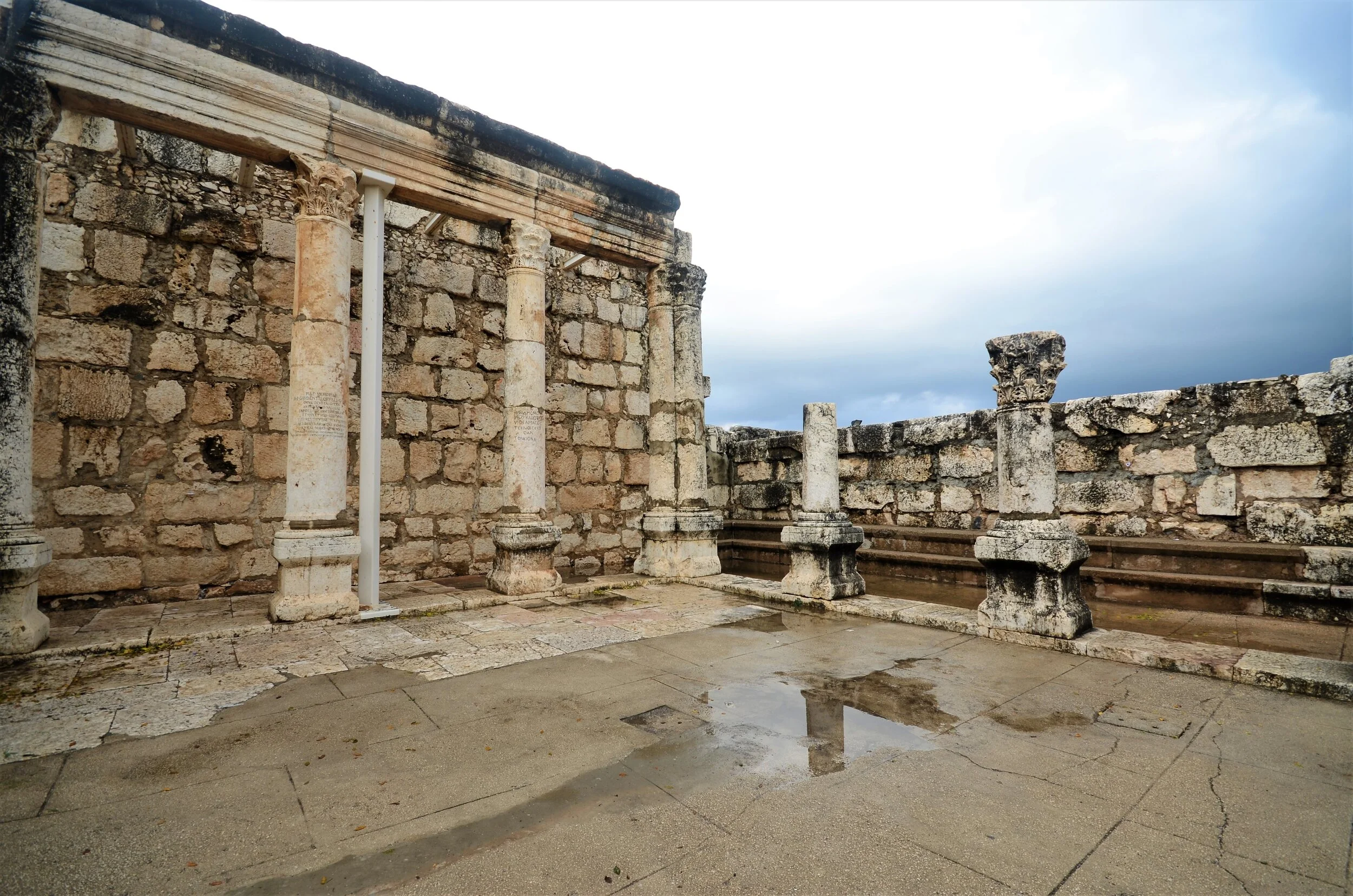
As the design of Solomon’s temple are laid out in these chapters, you can observe the types of imagery that went into the building. Cherubim, palm trees, and flowers are described in chapter 6. These all relate back to the Creation story in Genesis. Why would the temple draw imagery from the garden? What would this mean to the Israelites living when the temple was being built? What would it mean to the Israelites reading about the temple details years later?
Right after Solomon finished building the Lord’s house, he built his own. Compare the two- it took seven years to build the temple and thirteen years to build Solomon’s home. The Lord’s temple was sixty cubits long, twenty cubits wide, and thirty cubits high. Solomon’t house was one hundred cubits long, fifty cubits wide, and thirty cubits high. Why would this be significant enough to be included in the text?






The different sculptures within the temple all had symbolism. Why would these symbols be included in the Lord’s house? What do each of these images represent and how would the Israelites reading this book feel about them being in the temple?

A big picture observation you can track through the entire Bible is where God is and what He is doing. In these chapters, His house in Israel has just been finished and the ark of the covenant that carried His presence was placed inside. His presence was so holy that the priests were unable to minister. His glory so great, the people offered countless sacrifices to worship Him.

As Solomon consecrated the temple, he said a prayer repeating parts of the covenant. Asking God that if they sinned, when they turned back to Him, that He would always listen. Why would parts of the covenant be repeated as the temple was finished? After Solomon’s prayer, we read that God spoke to him again and promised to remain faithful to him when he was faithful to the Lord. Then He restates the curses He would bring to Israel if they forsook Him. Why would God respond with this after Solomon’s prayer? Right after this we read of Solomon’s riches but also the servants Israel made out of the people they were supposed to devote to destruction, how does this relate to their covenant with the Lord?

Like many others, the Queen of Sheba came to witness Solomon’s wisdom for herself. She found that the reports did not compare to what he was really like. Because of the gift of wisdom that God gave Solomon, people from around the world were praising His name and acknowledging His power. This was what God intended Israel to be. Throughout the Law, He had been giving them instruction on how to be an example to the rest of the world so that they would see His glory and worship Him too. Solomon’s wisdom was attracting other nations and causing them to seek why he was able to speak such knowledge and answer all their questions.

Though Solomon’s wisdom drew outsiders to Israel and the Lord, his power was also drawing him and his people away from God. In Deuteronomy 17:16-17 the Lord said that the king appointed over Israel was not to acquire many horses, and could not send the people back to Egypt even just to buy horses, the Law also said that the king could not have many wives because it would turn is heart away from God. Exodus 20:3-6 and Deuteronomy 12:29-31 speak against idolatry and following other nation’s religious rituals and practices. Leviticus 18:21 and 20:1-5 specifically call out the god Molech that other nations would sacrifice their children to. Though all of this is clearly in the Law, 1 Kings 10:23-11:8 show Solomon going against God’s commands. Why would there be this contrast between Israel drawing other nations to God and other nations using Solomon to draw Israel away from God?
Because of Solomon’s disobedience to the Law, God set people against him. But, because of David’s faithfulness to the Lord and God’s promise to allow his throne to reign forever, Solomon did not lose his kingdom. God told Solomon that his son would lose most of the kingdom but still remain king over some. The Lord prophesied through a man names Ahijah that Jeroboam, and Ephraimite, would be king over all but Judah. The tribe of Judah, chosen by God and promised to David, would remain under the rule of Solomon’s sons. This split would then become the North and South kingdoms of Israel. Rehoboam became a demanding king and Jeroboam caused Israel to fall farther from the Lord. Each king in Israel’s history, whether from the North or the South had a major role in keeping Israel looking toward the Lord or turning away from Him. The rest of this book we will observe what each king chose to do, what God did in response, and ask why the history of Israel went the way it did.
As important as the kings are in this book, it is also significant to keep track of the prophets. Prophets were people that heard from the Lord and spoke to Israel in order to bring them back to God’s heart. Chapter 13 starts off with a prophet who denounced Jereboam’s altar and declared another man would rise up who would remove the altars and idols Jeroboam had set up. Unfortunately, even the prophets fell away from the Lord’s commands at times. The old prophet was swayed by another prophet who lied and said he had heard from God that he was meant to eat and drink at his house. Why would the author include this powerful prophesy against Jeroboam and then show how the prophet immediately died? Why would this happen right after the split of the Northern and Southern kingdoms?
I found when studying the kings it became easier to remember each when I found a cinematic parallel. I would list the events that took place during the king’s life and the traits he exhibited in the text and then found someone who he reminded me of. I will share them as we study, maybe they will help these many men stick out more clearly in your mind.

King Jeroboam
Northern Kingdom 930-909 BC
Made golden calves for Israel to worship.
Hand shriveled up when he reached it out against the prophet.
Made priests out of anyone who wanted to be one.
Son became sick, sent to prophet to learn what would happen to him. Ahijah tells his wife that the son would die and Jeroboam and his offspring would be cut off from Israel because of his sin.
Why would Ahijah’s prophesy about Jeroboam and his sons be important to the Israelites that would read Kings much later? Why would God allow Jeroboam to become king when He knew he would sin so greatly?
I paired Jeroboam with the House of Slytherin from the Harry Potter books. They both made mistakes that lasted years later than the original evil.
King Rehoboam
Southern Kingdom 930-913 BC
Chose the counsel of young men and divided Israel.
Fought against the rest of Israel.
Built high places, pillars, and Asherim.
King of Egypt came and took all the treasures from the house of the Lord. Replaced with bronze.
Why would Rehoboam’s disregard for wise counsel be significant beyond the fact that it divided Israel?
The person I chose to represent Rehoboam was King Stefan from Maleficent. He started off fine but ended up letting the kingdom and his greed take control. He would not listen to others because of his blind rage. This pairs well with Rehoboam’s indifference to the opinions of those whose mattered.


King Abijam
Southern Kingdom 913-910 BC
Movie Parallel: Battle of Beruna, Narnia

King Nadab
Northern Kingdom 909-908 BC
Movie Parallel: Harry Osborn, Spiderman

King Asa
Southern Kingdom 910-869 BC
Movie Parallel: Adrian Toomes/Vulture, Spiderman

King Baasha
Northern Kingdom 908-886 BC
Movie Parallel: President Coin, Hunger Games


King Elah
Northern Kingdom 886-885 BC
Movie Parallel: Park Dong-ik, Parasite

King Omri
Northern Kingdom 885-874 BC
Movie Parallel: Woody vs Buzz, Toy Story

King Zimri
Northern Kingdom 885 BC
Movie Parallel: Toy Santa, The Santa Clause 2

King Ahab
Northern Kingdom 874-853 BC
Movie Parallel: Batman, The Dark Knight Rises
After reading about more of Israel’s kings, the author begins to write about the prophet Elijah. Chapters 17 and 18 contain an inclusion with Elijah first prophesying drought to Ahab then prophesying rain. In between we read that he was fed by birds and a stream, then a woman who had close to nothing. He also saved the woman’s son, and confronted Ahab and the prophets of false gods, proving that the Lord is the only true God. In the end he calls Ahab to send his chariots because rain was once again coming. Why would these events take place within the time of this drought? Why would this happen during Ahab’s reign? What do these different events with Elijah have in common? What does this show about who God is?

After Elijah’s great faith in the showdown against the prophets of Baal, he was immediately intimidated by Jezebel. The Lord, once again, had to show who He was and the power He would back Elijah up with. He provided him food and water and courage to confront Israel with the prophesy of the next kings and his successor. Why would Elijah’s faith so quickly fail after the incredible miracle God performed through him? Why would later Israelites need to read about this? After the Lord encouraged him, Elijah found Elisha and recruited him. Elisha provided for the people around him with sacrificed oxen and then went to assist Elijah. Why would it be important that Elisha followed so quickly but went back to sacrifice the oxen before leaving his family to work with Elijah?
Chapter 20 is an incredible example of how God works to bring glory to His name. Though Ahab was an evil king, He used him to destroy Ben-hadad and 32 other kingdoms, proving He is most powerful and was not limited to a certain terrain. Then when Ahab made a deal with Ben-Hadad, God defeated him, showing that his evil was not being rewarded and God was in control. Why would God use Ahab to destroy so many other kingdoms? How would this bring more to know who He was? How does this relate to what God was speaking to Elijah in chapter 19? Why would the author include these stories together like this?


The author of Kings chose to spend more time writing about certain kings. Asking why they did this can give us a clearer understanding of the purpose of these books. The reign of King Ahab is covered through six chapters. Ahab’s wife also place a role in the story. He broke the Law, marrying a foreign women and incorporating her religion into Israel. She was evil and the Lord promised that both he and his wife would die brutally for their sins. In chapter 21 we read another instance of Jezebel’s sin, killing an innocent man, even working the Law to her advantage (Deuteronomy 19:15). Why would the author write about the sins of King Ahab’s wife? Why would this story end with Ahab repenting? How does this affect the entire story being told in the books of Kings?
Throughout most of 1 Kings, Israel and Judah had been at war with one another. Here we read that Ahab and Jehoshaphat worked together to go to war against Syria. King Jehoshaphat also ensured that they sought the Lord’s counsel before going into war. Oddly, all but one prophet confirmed that it would be a great and victorious battle. Only the prophet Micaiah said that Israel would be left as sheep without a shepherd. Why would this simile be used? Why would God send Ahab to war with this word in the mouths of so many prophets? Why did he still use Micaiah to warn how it would truly end? Ahab did end up dying in the battle by accident and his blood was licked up by dogs just as God had said. What could this have meant to Israelites that would one day read the history of their kingdom? Why would these kings’ stories need to be recorded this way?

King Jehoshaphat
Southern Kingdom 872-848 BC
Movie Parallel: King T’challa, Black Panther

King Ahaziah
Northern Kingdom 853-852 BC
Movie Parallel: Uma, Descendants 2

Day 109
2 Kings 1-3
Elijah spoke on God’s behalf to Israel. 2 Kings begins with him being sent to Ahaziah to prove that God was in control and knew what he was doing. Using Elijah, God once again demonstrated His power through fire. How is this similar to God’s power shown in 1 Kings 18, with the prophets of Baal? How is it different? Why would God use fire to show who He was and what does this say about God’s power?
The number three appears many times throughout the books of Kings. Within the first two chapters of the second book Elijah dealt with three groups of fifty men that God sent fire to consume them as they sought to bring him to the king, and Elisha refused to leave Elijah’s side three times before Elijah was taken to heaven. There were many times in 1 Kings as well where the number three showed up and you can track it through the rest of 2 Kings as well. As you read more ask why this number would be significant and why it would be continuously used in these stories.

Constantly throughout 1 and 2 Kings we read of God’s power being shown to disbelievers. From Solomon attracting people from all over the world to seek out the God who gave him wisdom, to Jehoram’s battle with Moab where God provided water to their dehydrated army. More than just a chronicle of events, the author seems to be keeping an account of how God was moving in Israel and showing Himself through each king. Why would God be using every king even when they were evil? Why would this be the purpose of these books? How would this description of Israel’s history affect Israelites reading these books later?

Day 110
2 Kings 4-5
2 Kings 4 relays stories of the miracles that Elisha performed. They go along with what was written about Elijah in 1 Kings. You can compare the two and look back at what Elisha asked of Elijah in 2 Kings 2; to have a double portion of his blessing. These stories show that Elisha was blessed with the Lord’s power of healing as Elijah had been and could bring health and wealth to those who were righteous. Why would God work through Elisha in this way? How does it correlate to what Elisha asked as Elijah was being taken up to heaven? Why would the author include these stories here in 2 Kings?

The story of Naaman and Gehazi shows that those outside of Israel who had faith in what God spoke through his prophets would be welcomed and taken care of, and those in Israel that went agains the Lord’s word would be punished for their disobedience. What values does this chapter portray? Why would it be significant for Israelites to read about a Syrian army commander being healed by the Lord? Remember this as we get into the prophets and continue asking why God would move in this way.