
Studying Your Bible
Getting into studying your Bible for the first time can be overwhelming. Trying to get back into reading your Bible can be intimidating. Maybe you’ve been studying your Bible and are looking for something new or you are ready to read something to get you excited about the Word again. Whatever has brought you here, I have lots of help that will get you inspired to read your Bible and dig deeper into what it says!

From September 2019 to June 2020 I was taking a course where I learned how to study the Bible inductively. I would spend 40-60 hours a week just looking at what God’s Word said. It’s been the greatest joy of my life to read the Bible this way. Studying inductively meant we put aside our personal bias and looked at what the text said, who it was written to, and why it would be written. By the end we would have a better picture of what each book was about and how it applies to our life today.
As the school came to a close, our final assignment was to write out God’s Redemptive plan in one essay. The entire span of the Bible summed up into words I could put to paper. It was a daunting idea but doing so brought so much clarity to what I was seeing in every single book. To start this year long study, I would like to share with you the Redemptive Plan through the Bible. My hope would be that you see the big picture and that as you study each day it would help you remember that the book you’re reading fits into God’s plan perfectly.
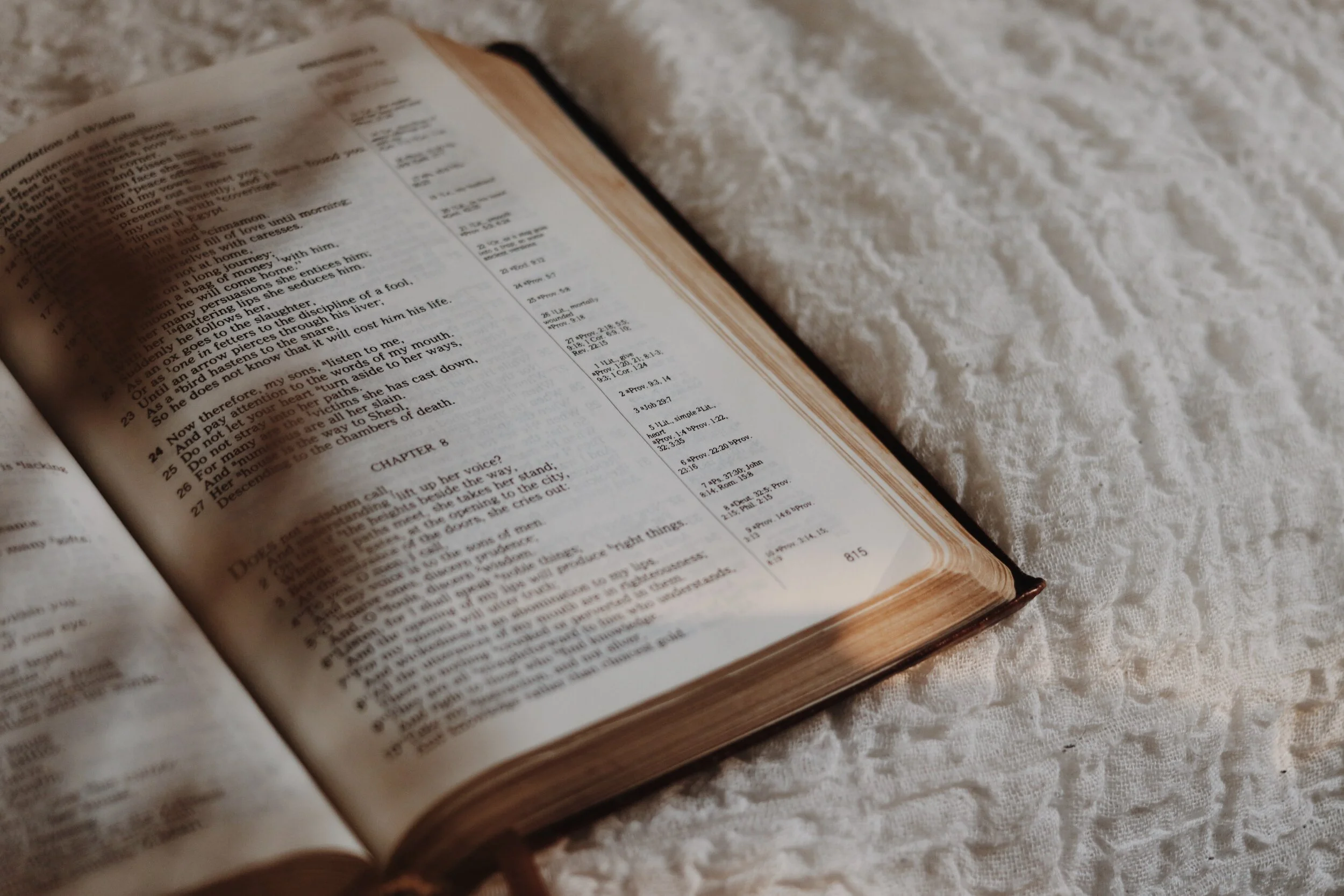
The Inductive Method
Let the Word lead you and shape your beliefs. Don’t try to prove your beliefs while reading.
Before studying each book it is helpful to know a bit about its background. This can help you get into the Mind of the original reader and understand better what the author meant as they wrote. At the beginning of each book I will post this graphic that will give you basic information that can be helpful. These will show you the author, structure, and date of each book.
Three Steps to Studying Inductively
Observation
What
Interpretation
Why
Application
How

Observation
Look at the text, remembering the context and pull out what you notice. Continue asking what the author has said and use the clues that they have written. Click below to find some helpful questions to get you started.
Interpretation
Once you have pulled out observations from what you have read it’s time to interpret! This is a crucial step that many people skip. It’s important to remember that the Bible was written for us but not to us. The authors of each book lived thousands of years ago and wrote with a specific audience in mind. I will provide historical background on each book’s specific page so as you go through them you can understand the context and culture surrounding the text.
To interpret you ask the question “why?” Take what you have seen and ask why the author would include it. Based on the history you can try to get into the original reader’s perspective to learn what they would understand from what the author wrote. Don’t expect to answer every question you have but keep asking!
Besides what I give on the different book pages, there are other helpful websites you can use that were so useful to me while I was in school.