

Leviticus

At the end of Exodus we read that Moses couldn’t enter the tent of meeting because of God’s holiness. Leviticus is a book that would show the people of Israel how to live holy lives in order to live with God. The offerings that the text starts out describing would be how the people could atone for their sins. In Genesis God told Adam and Eve that if they ate the fruit they would surely die. When they ate the fruit sin entered the world and God had to separate them from Himself. Their death was spiritual and, because they couldn’t get to the tree of life, would one day be physical as well. The consequence for sin is always death and God is separate from all sin. God had to provide a way for the people to be near Him and, though it was imperfect, He offered them His presence in return for their animal sacrifices.
Two Kinds of Offerings
Voluntary
In chapters 1-3 the offerings described (burnt, grain, and peace) are voluntary offerings. These are not required but are for the people whose hearts are moved. God is so good and His glory often attracts gifts. These described are what God asks of those wishing to bless Him.
Mandatory
Chapter 4 is the start of the mandatory offerings. These were what God required of the people to atone for their sins. God lays down the Law that the people must follow but gives them a way to cleanse themselves through the sacrifice of an animal.
God’s holiness is very important to the book of Leviticus. In this book He asks the people of Israel to be holy as He is holy and He shows them the way that they can be. Though the Law isn’t a perfect fix to the problem of sin, it gave the people a chance to be near the presence of the Lord. A good way to picture God’s holiness is to think of the sun. The sun is incredible and bright and life giving, but if you get too close it is also incredibly dangerous. This is how God’s glory and holiness is. In Exodus it describes Moses as shining and needing to cover his face with a veil just because he spoke with God. If the people couldn’t look at his face directly, just imagine how it was with God’s glory right in their midst.

God gave clear instruction for how He would receive offerings from the Israelites. The sin offerings were important because they were what would allow the people to still live near God and would provide them with the means to be forgiven. In chapter 5 God gave a way for all people to atone for their sins. Whether they had much or little, God made sure that all people could afford to repent for their sins through an offering of some kind. What does this show about the offerings and what was important about them?
Moving from what should be sacrificed, God begins to instruct Moses and how these offerings should be sacrificed. This is where the specifics of what would happen with the animals, where they would go, and what would be done with them was written. God gave the people clear ways for them to live in His presence and, though it seems so harsh now to kill so many animals, it was probably a relief for the people to have a way to be forgiven for their sins. God had just given them a part of their Law when He created the covenant with them in Exodus. This Law highlighted all the sin they could commit. It was probably overwhelming to know how many ways they could do wrong. With God immediately giving Moses instruction on how to atone for these sins they were becoming aware of the people probably had more confidence in their ability to stay near God’s presence.


Within the first seven chapters of Leviticus we see a reminder of God’s justice and His grace. Justice because all sin must be atoned for and grace through His way of providing a covering that didn’t cost human lives. The Israelites would have lived with this reminder every day. They shouldn’t have been able to take for granted all that God had done for them because He was constantly with them and providing for them even through the sacrifices they made to Him. Why would this be how Leviticus starts? Why would the early Hebrew readers need to get this understanding at the beginning of this second book of the Law?

Throughout Leviticus there is an interchange between God speaking to Moses and Moses acting on what God commanded. In the first seven chapters of the book God was giving instruction on how to make sacrifices. Starting in chapter eight Moses consecrated the priests so that they could begin making the offerings as directed. Why would this be important for the author to show throughout this book? What would the Israelites learn from this? Almost every paragraph in chapters eight and nine ends with “as the Lord commanded.” Continue observing this interchange through Leviticus and ask why it would be important to the structure of the book.
“‘Among those who are near me I will be sanctified, and before all the people I will be glorified.’”
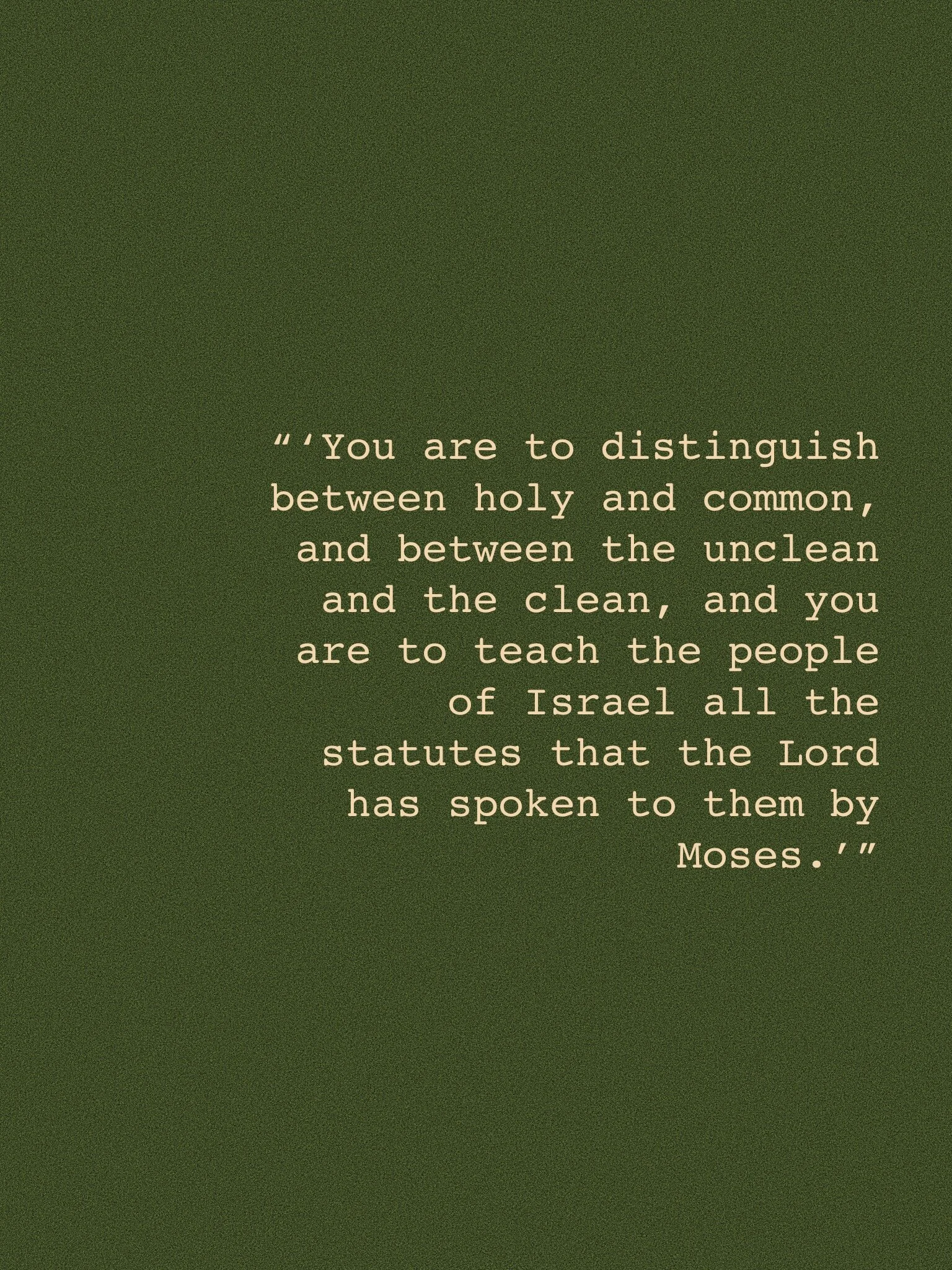
God’s holiness is not something to take lightly. Just as the people were implementing a sacrificial system that would be a constant reminder of God’s justice and grace, they were given another clear example of this through Nadab and Abihu. The priests were expected to uphold God’s Law as an example to the nation and the nation was going to be the precedent for all people. These men were careless right as God was revealing Himself to the Israelites and were consumed by the fire of His holiness.

In chapter 11 God begins separating the clean and unclean. First to be given the distinction is animals, the people’s food. God told the people that there were specific animals that they could eat and certain animals that were off limits. This diet was meant to set the nation of Israel apart from the rest of the world. That even what they ate was different would likely draw attention from the other nations.
Here in Leviticus God begins using the statement “be holy, for I am holy.” He invites the people of Israel to live in holiness with Him. Because He says this, it must be achievable. God was giving them a guide to how to live a holy life and, though it was a lot to follow, it wasn’t impossible to do. He was asking the people to be like Him.

The different impurities addressed in these three chapters have to do with animals, bodily fluids, dead bodies, and diseases. Each of these has some relation to death or blood (which is linked to life). God cannot be near death because death is a result of sin and He is the absolute opposite of sin. These impurities were associated with sin in one way or another and this is what God was combatting by giving the people His Law.

Sicknesses that lead to death were also considered unclean. Instead of just abandoning anyone that became sick, the Lord gave instruction on how to check on those with diseases. Before they were considered unclean and sent out of the camp, they were quarantined and observed to understand if the disease was lasting or if it would heal and the person could live among the people once again. The Israelites were important to God. Their diseases didn’t fit within His holy presence but He ensured that those that weren’t carrying a disease would still be able to rejoin society.

In chapter 14, God gives instruction to Moses on how a person with a leprous disease on their body or in their house would deal with the situation. In both cases, two birds were used in the sacrificial offering. One to sacrifice and use the blood, the other to dip in the blood, transfer the impurity, and to let it leave the camp. This comes up in other sacrifices too. Why would it be important for the people to have a physical animal to lay their hands on when making offerings for their sins?
Chapter 15 goes into detail about bodily fluids that would cause the people of Israel to be considered unclean for a time. These bodily fluids were also linked to mortality in the Hebrew mindset which would also make them associated, in part, with death. It’s important to realize, though, that each of these situations mentioned through chapters 11-15 weren’t sin in and of themselves. People were bound to have these occur in their lives. Whether they were a man or a woman, bodily fluids were a part of life. Disease couldn’t be avoided. Touching unclean animals or items was inevitable. It was being in the presence of the Lord while bearing these impurities that made it sin. God’s holiness could not be near these unclean problems without destroying them, as seen by Nadab and Abihu’s destruction. They were careless. God was showing the people that, if they were thoughtful and respected His holiness, they could be near Him without fear of being in danger.


After addressing what was considered clean and unclean in the camp and giving instruction on how to deal with uncleanliness, God created a specific day where Aaron, or the acting priest, would make atonement and purify the camp all the way to the Most Holy Place. This gives a clear understanding of where certain spaces landed on this spectrum of clean and unclean. Outside the camp is where people were sent when they carried a disease. It was also where God told them to send the animals that held the sin of the people. Inside the camp, where everyone lived, was meant to stay clean and the people were observed and follow the Law God was giving them in order for it to stay that way. Then there was the court where the tabernacle resided and the Holy Place within the tabernacle. No one but the priests were allowed to go into the tabernacle. In the Most Holy Place, the purest place in all the camp, only the high priest could enter and it was only on the Day of Atonement each year. God’s presence, as we’ve talked about before, was so powerful and filled with glory that humans could not come near it. All this purifying happened so that the people could even live near the tabernacle. It was supposed to be revered and awe inspiring.
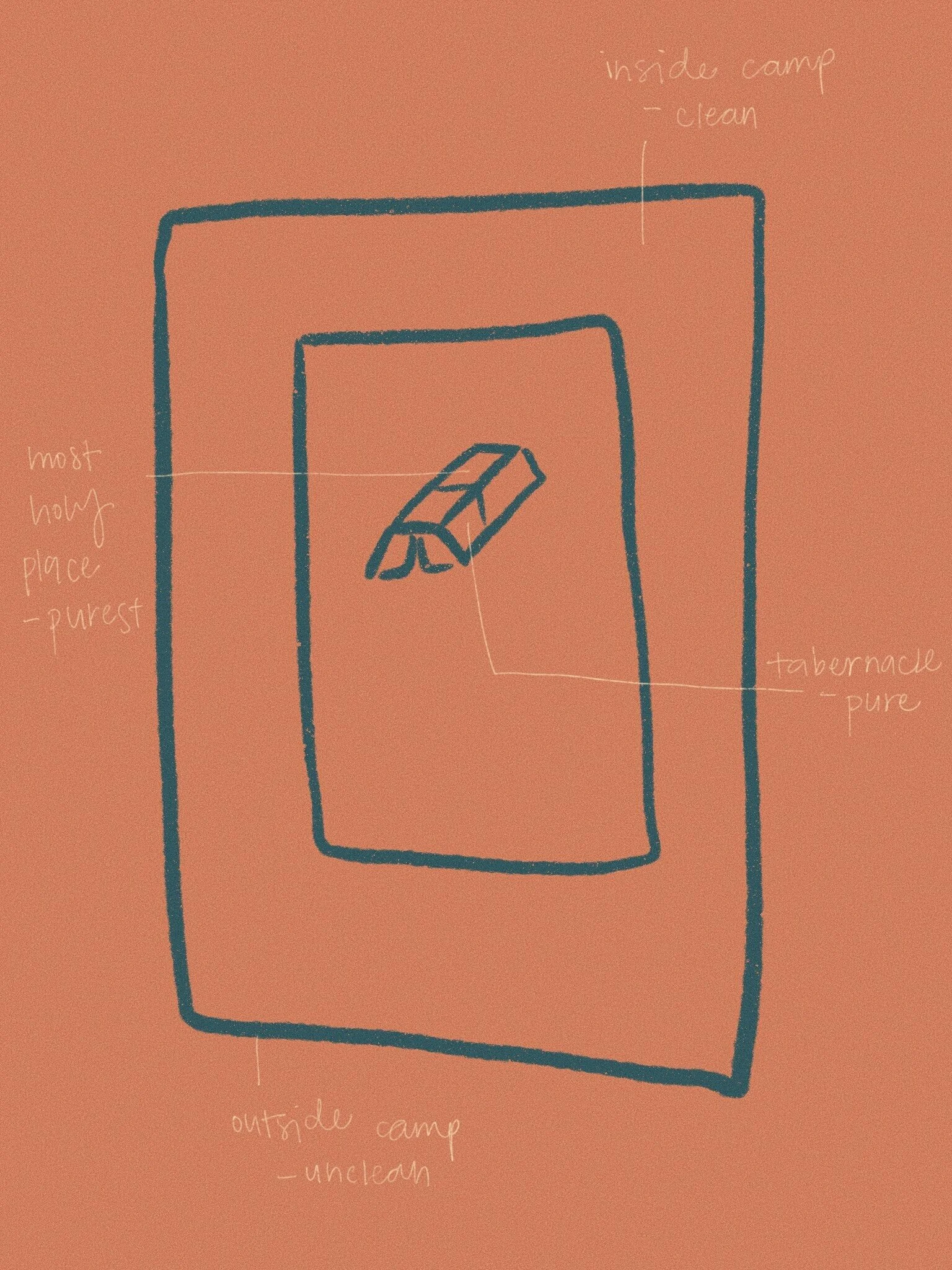
With the tabernacle in place, the people were expected to bring all sacrifices to the altar. This was their one stop for making offerings. The text says that this was so that they would not make sacrifices to any gods or demons. Why would God institute this practice within the Israelites camp after they left Egypt?
Blood is Life
God makes it very clear that blood is not to be eaten. The people of Israel were to make sure that the blood was drained in any animal before they ate it. This was the way God had provided for them to be forgiven of their sins in His presence. The consequence of sin is death and because of this, and because of God’s love for His people, the death was of the animals. This blood, the life that was given for their own, was precious. Not something to be taken lightly. Not something to use for other purposes. It was to be used in sacrifice or else poured out and covered with earth.
Chapter 18 is a chapter all about what God says is abominable regarding sex. One thing to notice here is that these mainly have to do with incest. If we look back to Genesis 2:24, after God created Eve, she and Adam joined together and they were considered as one flesh. Committing one of these sexual sins would lead to a break or a perversion of the idea of one flesh.
Another thing we can observe is the difference between this part of God’s Law and the previous. One makes clear what is unclean, the other defines what is unholy. When we observe these in the context of the New Testament, it may be easier to get an idea of what Jesus’ sacrifice did to these Laws. I often find myself asking what parts of the Laws we still need to follow and what were for the Israelites and their specific time and culture. It can be confusing but what helps is asking the value of the law. Looking at what God’s heart is behind giving a command can make it easier to understand in context with the Hebrews in the wilderness, and how it still relates to us today. Laws concerning what was unclean are laws that are covered by sacrifices and, therefore, were taken care of by Jesus’ death and resurrection. The value behind them still applies but God isn’t requiring us to sacrifice animals each day to atone for the unclean things we’ve done. The Laws that address unholiness are a different story. God asks people in the book of Leviticus to be holy as He is holy. This holiness was important then and is now. When a law applies to these aspects of how to be holy, they can still be important to us today, and understanding why we would want to follow them comes from looking at the value that goes along with it.
I won’t usually bring up the New Testament as we are studying the Old Testament because the original readers of these books weren’t aware of Jesus’ ultimate sacrifice as they read their Law and heard the prophecies. But, because figuring out how the Bible applies to us today is the whole reason to study it, I thought it was important to remind you to look for the values in these laws and ask whether they are speaking of being clean or of being holy.


Be Holy For I Am Holy
In these next two chapters of Leviticus, God is once again calling His chosen people to be holy like Him. He created people in His likeness and image (Genesis 1:27), now, even after sin, He wants the Israelites to reflect Him to the rest of the world. He is giving them lots more laws that have to do with holiness. God commands the Israelites to follow them because He is their God. Ask what these laws values are, why would God include them? Why would he first remind the people of their ability to be holy and then command them to follow the laws He gives? How do those values relate to life today?
There is an inclusion within chapters 19 and 20; 19 starts off reminding the people of Israel to follow in God’s example of holiness and repeats some of the Ten Commandments. Then the middle of these chapters goes into laws that relate to different parts of life and can each correspond to one of the Ten Commandments. Finally, at the end of chapter 20, God tells the people not to follow the practices of the people in the land He was going to give. He tells them exactly why He gave them the specific laws He just laid out: because the other nations that they had left and were about to take over followed these customs and they were meant to be set apart. The Israelites were to be God’s people. Why would it be that He would want to ensure that they did not act like the Egyptians (where they came from) or the Canaanites (where they were going)?

Chapters 21 and 22 covers what would be presented in front of God. First the priests, then the sacrifices. God’s holiness, as we looked at the other day, was mainly contained within the Most Holy Place so that the people could actually live near Him. Because of this, the precautions taken to ensure purity among those who came closest to God’s presence and all that they presented Him for atonement needed to be laid out clearly.


In chapter 23, God tells the people that there are seven occasions He wants them to observe each year. Seven in Hebrew is a number of completion. It is considered the number of perfection, rest, and holiness. Seven times in the year, the Israelites were called to remember the Lord in different ways and to honor Him and show their trust in Him through times of rest and giving. When reading about each of these feasts, and the Sabbath, ask why God would ask the people to observe these consistently? What would their significance be to the Israelites in the wilderness and the generations to come? Why would God want them to spend weeks remembering specific events or celebrating certain parts of life?


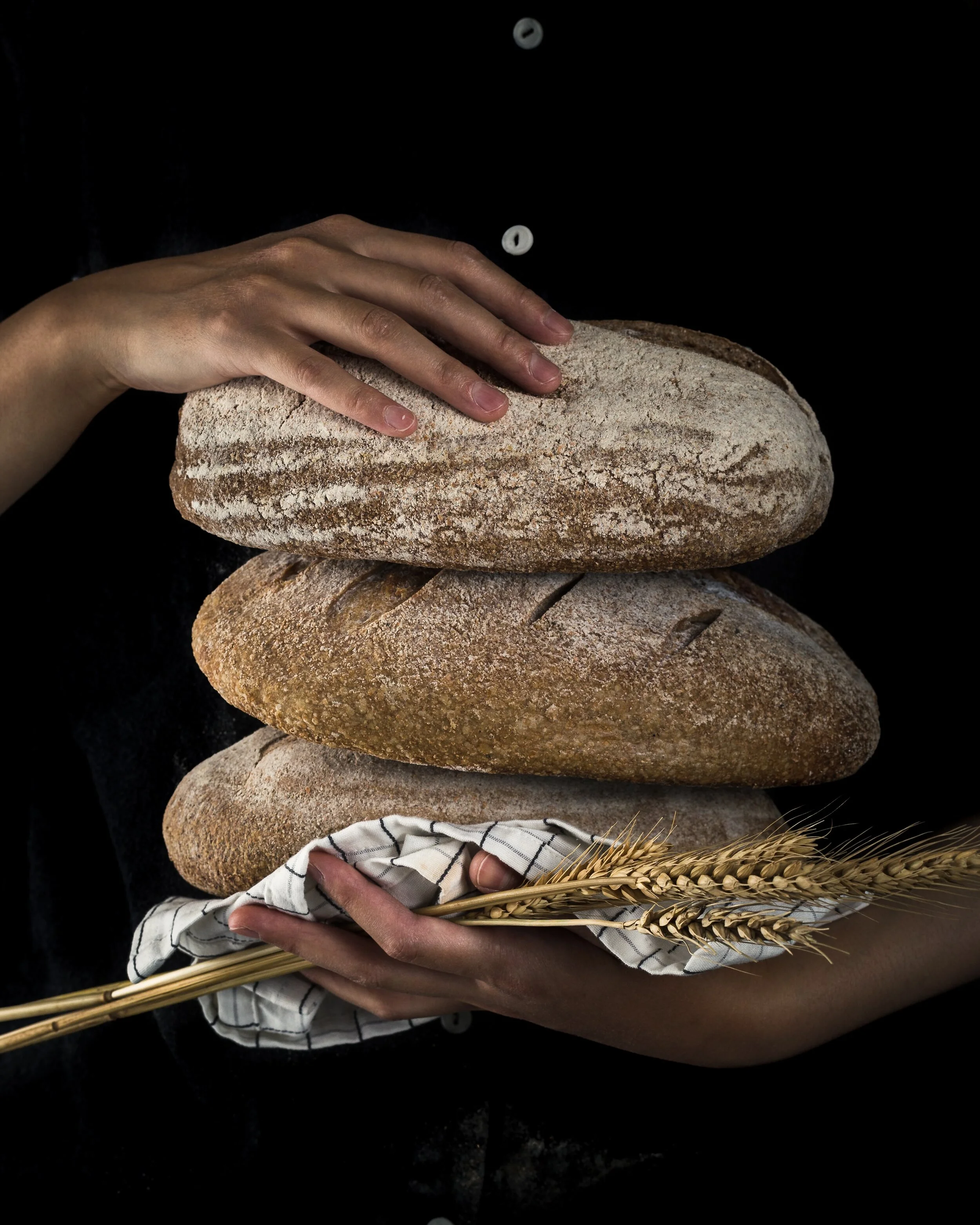
This first section of Leviticus 24 repeats the word “forever.” God tells the priests to have a lamp burning as a statute, and the bread arranged as their covenant. These signs would show that the Israelites were aware of God’s sovereignty and desire for a relationship.
After creating the sign of the covenant with His people, God has to deal with a man using His name as a curse and tells the people how to respond in those situations. This part seems intense. God tells Israel that it should be an eye for an eye, a tooth for a tooth. All that was done should be repaid. There are different ways to look at this but a good question to start with is asking what the value is behind this law? Why would God require death for death? Think about what we’ve learned about sin and God since starting this Bible study and as how this fits into what we know about Him.

God instituted a Sabbath year and a Year of Jubilee for the Israelites to remember. The Sabbath year was a time to allow their land to rest. God promised the people of Israel that He would provide for them in that year, saying that they would have enough crops for the next three years. The Year of Jubilee was similar. This was another year of rest and, along with that, it was a year of restoration. People would return properties to others and release servants. He asked the Israelites to follow this and told them He would bless them in the land He was giving them if they did. Once He laid out the time the Year of Jubilee would take place, He gave clear redemption instructions. Why would He start this tradition before the Israelites got to the promised land?

The final parts of Leviticus focus on conditions that the Lord gave the people of Israel. These conditions had to do with the Law that He just laid out, giving them the option to follow what He asked of them and showing them what would happen whether they chose to or not. As we found in Genesis, God was giving them the choice, one that brought life and blessings and the other that would lead to pain and punishments because it was the choice of sin and death.
Obedience - Blessings
Rain in season.
Land and trees shall yield and increase.
Threshing and harvest shall last.
Eat until full.
Dwell in land securely and peacefully.
Dangers and threats removed.
Conquer enemies.
Be fruitful and multiply.
Confirm covenant.
Eat old store and clear for new.
God dwell in land.
“But if they confess their iniquity and the iniquity of their fathers… I will remember my covenant with Jacob… with Isaac and… with Abraham, and I will remember the land.”
Disobedience - Curses
Consuming panic, disease, and fever.
Sow seed in vain- enemies shall eat.
Ruled by enemies.
Always fleeing.
Break pride and power.
Land and trees shall not yield.
Beasts let loose.
God against.
Pestilence in land.
Delivered to enemies.
Eat and not be satisfied.
Eat your sons and daughters.
Cities waste and sanctuaries desolate.
Faint hearts.
Scattered and perish among nations.
Why would God create such strict conditions for the people to follow? Why would the list for His punishments be longer than the list of His blessings? Why would He always give them a chance to turn back to Him? In Deuteronomy we will get to explore these questions even more. Each of these books of the Law have their specific purpose and can be so exciting to dig into!
The very last chapter of Leviticus brings up vows that the people of Israel could make to the Lord. Vows concerning people, animals, and property. These were items that people could dedicate to God in advance, providing them once God blessed them with these things. Vows were a form of trust and praise. They showed that the person making the vow was willing to give what they received from God back to Him and that they believed He would provide for them. These dedicated items were made holy to the Lord and were used in the sanctuary by the priests. Why would the author end Leviticus with this text concerning vows? Why would their vows be important to God?


You Finished Leviticus!
Now that you have finished observing and interpreting, I would encourage you to reflect on the timeless truths you have found in the Word and to apply it to your life. Here are some questions to help bring Leviticus home.