
1 + 2 Samuel


Leading from the Ruth and Judges, 1 Samuel starts with the account of Samuel’s birth. There are many comparisons to be made to the last two books: Hannah vowed to the Lord to keep Samuel in His presence and to never cut his hair just like Samson’s vow, parts of her prayer sound like the life Ruth found in Israel, and the entire prayer speaks of God’s faithfulness to those faithful to him, keeping the covenant made between them. Why would this be how the author started the book?
There is an interchange between Samuel and Eli’s sons, the priests in chapters two and three. Eli’s sons were sinning and disregarding all parts of the Law while attending to God’s dwelling place. Samuel was growing in stature and favor in the presence of God. The books of Samuel mark a transition from judges to prophets to kings in Israel’s history, why would it be significant that the priests were doing so horribly and Samuel was growing? How does this relate to the book of Judges? As Samuel grew, he encountered the Lord and learned His voice. Samuel was being taught how to listen and obey. He was ready for the Lord’s instruction. How would this impact what came next for Israel?


Following the Ark of the Covenant

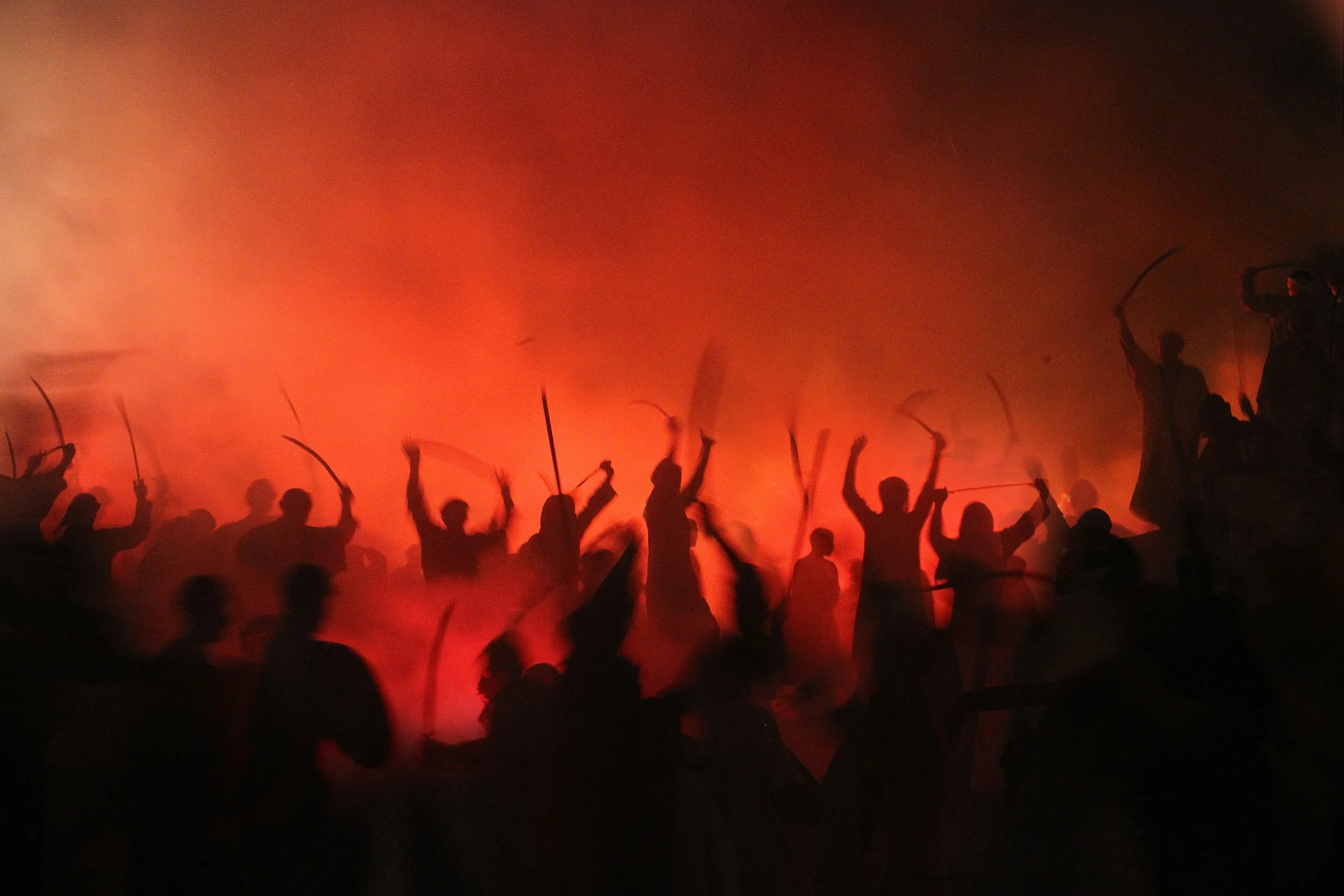


Israel, in their time of faithlessness, were also being careless with God’s presence. The Ark of the Covenant was meant to be the Most Holy Place and kept in purity at all times. All of the books of the Law set up this fact. Instead of keeping it safe, the Israelites thought if they brought their God into war with them everything would go in their favor. Only after getting captured, did God’s presence in the ark impact the Philistines. Why would God wait to show the Philistines His power once He was already taken from Israel? What would this show the Israelites? Why would it be significant that Samuel asked God to fight on their behalf at the end of chapter 7? Continue to follow the ark of the covenant through these books, God’s presence is not meant to be taken lightly.

A King
God Says:
Your sons and daughters will be servants.
Take your best fields, vineyards, and orchards.
Take a tenth of your grain and vineyards.
Take best servants, donkeys, and a tenth of your flock.
You will be slaves and cry out with no answer.
Israel Says:
Like other nations.
Judge.
Fight our battles.
Who does this King the Israelites are describing sound like? We have established since Genesis that the Lord was setting Israel apart from the other nations, He was to be their Judge, and that He was their victory in battle.

God knew that Israel would one day ask for a king, He said He would give them one though it meant they were turning from Him as their leader. God used Samuel to appoint Saul as the first king of Israel. Saul was a man from the tribe of Benjamin, the same tribe that Israel fought against at the end of Judges, but he was tall and strong, the ideal representation of a nation. God promised to save Israel from their enemies through Saul’s leadership, though the people asked for a human representative, he was supposed to point them back to who was really the authority over Israel. Though, at first, Saul hid from the responsibility, he was able to rally together all of Israel to fight for their own when needed, showing that Israel could trust him to be there for them. God would move with and through Saul, but Samuel warned him and Israel that they would need to obey the Lord in order for their kingdom to prosper. Why would Saul be the ideal pick in the eyes of the Israelites for their first king? Why would Israel choose a human over God?
Samuel was working on God’s behalf and appointed Saul because God chose him. Samuel had grown studying the Law and being in the Lord’s presence daily. He would know better than anyone else in Israel that God was meant to be King. As Samuel celebrated the defeat of the Ammonites with Israel, he reminded them of who God was and what their new king meant for them. Why would he take time after their victory to point them back to their history?

Saul made the mistake of taking holy practices into his own hands. As king, he was meant to lead the people and point them to God but he was not meant to take the place of the priests or prophets. Samuel told Saul the most important thing when this happened: if he had obeyed the Lord’s commands and followed Him completely, God would have established his throne forever and made all he did prosper. God was looking for someone after His own heart. How does this connect to God’s Law and His commands on sacrifices that Saul broke?
Saul and his son Jonathan were very different. You can compare how Saul was a man of show and words while Jonathan was a man of action. Saul saw that people were leaving his army so sacrificed to the Lord without waiting for Samuel. He made a quick claim to curse any person who ate on the day they were battling the Philistines and was ready to follow through with it even when it meant killing his own son. Jonathan saw that God could fight for Israel and took a chance to do something when he could. He fought off Philistines with only one other man by his side and at honey because he knew it would refresh him.
God had told Saul that he would use him, as the first king of Israel, to defeat the Philistines, but Jonathan was doing all the work. Why would this be how things played out? What would it show the later generations of Israelites reading this book about Saul and his son? What would it show them about God’s choices in who led Israel?


God told Saul to destroy the Amalekites and devote everything to destruction. Nothing was to be spared because this nation had gone against the Lord when they opposed the Israelites in the wilderness. Instead of following through with God’s command, Saul made himself believe he did what was right by keeping the best sheep to offer as sacrifices. He also kept King Agag alive, almost like a trophy of Israel’s victory. Why would this cause God to regret his decision to appoint Saul as king? How can God regret something when He knows what will happen beforehand? If God knew Saul would one day do this, why would He appoint him in the first place?

Has the Lord as great delight in burnt offerings and sacrifices,
as in obeying the voice of the Lord?
Behold, to obey is better than sacrifice,
and to listen than the fat of rams.
David was anointed to be king while he was a shepherd boy for his father. Samuel expected the Lord to pick one of his older brothers. God reminded Samuel of what he had told Saul, He looks at the heart. He showed David favor from that moment. His Spirit never left him and he was brought into the king’s service and loved by Saul. Why would he become a servant to the original king after he had just been appointed to be the next king? Why would God look at the heart before anything else? How does this relate back to the Law?

At the end of chapter 16, when reading of how David got to be in the king’s service, the author writes that a “harmful spirit from the Lord” came upon Saul and tormented him. It’s important to know that the Hebrew’s understanding of “good and evil” was developed after their period of exile which is many years after 1 Samuel was written. At the time, they would have believed all supernatural forces were an attribute of God. This goes along with other religions of the time, all believing that when someone did something bad their deity would cause them to have an evil spirit of some sort. The Hebrew word translated to evil in English can have the moral meaning as we read it or can also have an experiential meaning. Similar to the word ill in our language, as in “ill will” or “ill feelings” the word could be used more as a way to say Saul experienced something negative after the Lord’s spirit left him. (Cultural Background Study Bible)

Goliath’s taunting the Israelites and the call to have one man fight against him to decide the outcome of the battle was an ancient practice. This was often done in order to see which deity was superior. To have one representative from both sides fight gave the people an indication of how the rest of the battle or war would go. They believed that their deities were not limited to the strength of those fighting and so David’s victory over Goliath would show that God was much stronger than any god that the Philistines worshiped. David went against Goliath because he was defying his God. He reminds both Israel and the Philistines that God did not need a sword to win a battle, but His divinity and power would cause Israel to prosper. This is not the first time Israel has learned this lesson. He showed the people through Gideon in Judges, when He made the sun stand still in Joshua, and He called them to always remember His provision in their lives in Deuteronomy. Here, David stands up for the Lord in the midst of two faithless nations.

As David’s favor grew with Israel and the Lord, Saul became more and more agitated. Why would the author set up the story this way, showing Saul’s fall from grace, David’s anointing, then David’s success and Sauls increasing disturbance? What would the author be showing the later readers?
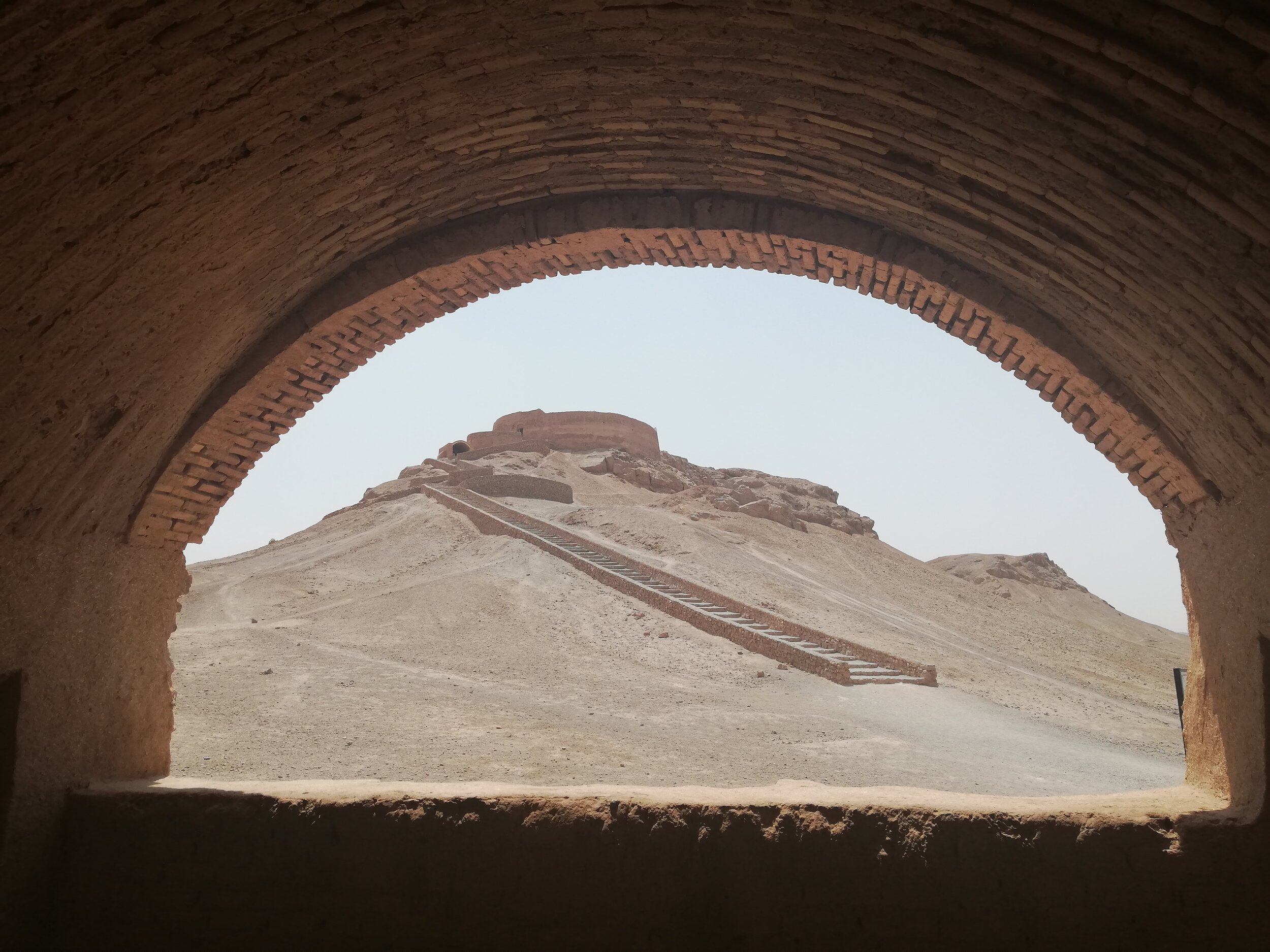

Jonathan loved David and was willing to protect him even against his own father. Jonathan would have been the next in line for the throne yet he was helping the man anointed to take over from Saul. Why would the author emphasize the relationship between David and Jonathan as David was running from Saul?
As David fled from Saul, he was eating leftover holy bread and pretending to be mad in order to stay alive. Though God had already promised he would one day be king, David was a servant and a fugitive before the day came. Why would the author include these stories of him eating holy bread from the priest and going to Gath? Why would later Israelites need to read about David’s life between being anointed and becoming king? What significance would it hold for them?

Saul was keeping followers through threats and violence while David was gaining a company of mistreated citizens. Saul blamed others for not knowing where David was. David blamed himself for what happened to the priests in Nob. Why is there this juxtaposition here in the text?
The word hand is repeated 17 times in chapters 23 and 24. Either speaking of who God was with or who He was against. God kept David out of Saul’s hands. And David’s men believed God had given Saul into David’s hand when they were in the cave. By the end of chapter 24, as Saul sees that David had the chance to kill him but didn’t take it, Saul tells him that he believes the kingdom will be transferred to David. What would the repetition of the word hand mean here? Why would this be how the author showed who God’s favor was upon?

Samuel dying here in the book of 1 Samuel signifies that, if he was at once the author, he was no longer writing this story. It is believed that the prophets Gad and Nathan finished the books. Why would the authors find this story worth completing through different generations of authors?
As David neared Nabal’s land, he could have expected an open reception. The time of shearing sheep was a time of abundance and because Nabal had three thousand sheep he was considered extremely wealthy. We also read the Abigail brought David and his men a surplus of gifts. There would be no reason for Nabal to turn them away when he was doing so well. David’s vow to kill all of Nabal’s people is similar to what Saul claimed in chapter 14 when he told all his people not to eat until the Philistines were defeated. These hasty oaths were meant to be binding but it was understood that the deity, in this case God, would have ultimate control of a situation. If God determined that the vow was not the best course of action (as in both of these cases) the oath was void. Why would the author draw a comparison here between Saul and David? How does this correlate to a new author being integrated into this book?

Once again David had the chance to overtake Saul and take his place as the anointed king but he refrained because he knew God had still given Saul a place of authority and it wasn’t his place to change that. David knew what he had been promised but he also knew that he wasn’t in control of how he got where he was promised to be. David was being patient and Saul saw that he was following the Lord’s will. Saul knew that God was going to reward David for being faithful to His plan. Even as David lived in Philistia, among Israel’s main enemy of the time, God showed him favor and he was given land and peace. Why would the original readers of this book need to see David’s patience?
Under Samuel’s guidance, Saul had put out all the diviners and necromancers, anyone committing unlawful sins. When Samuel was gone and Saul had fallen from the good graces of the Lord so completely that he had no confidence in which direction Israel was to go, Saul gave in to more disobedience and sought out a medium. Thinking that asking for Samuel’s help from beyond the grave was somehow going to be useful Saul learned that his faithlessness was leading him towards his death. Not only was he losing the kingdom, soon he would be losing his life. Why would the author include a story of a medium conjuring Samuel from the dead? What would this show Israelites that read this book? How does it move the Saul’s story forward and relate to what was already told about him?
Even in the midst of disaster, David sought the Lord’s advice and was strengthened by His authority. David and his men lost everything but knew they would get it back because God told them to go after it. They wept for what they lost but immediately went to God and what He said to do. This faithfulness led to their success.

These last chapters of 1 Samuel sum up the contrast between Saul and David that has been displayed through the book. Saul, fearing war, loses faith and seeks out necromancers. David, losing everything, gains strength in the Lord and seeks out His plan. Saul lost the war against the Philistines and died in battle. David was trusted by the Philistines and succeeded in his own battle against the Amalekites. Saul caused all of Israel to lose hope and flee. David caused his men to reunite with their families and remain in their homes. Why would the author want to make it abundantly clear that David was being faithful to the Lord? Why is this where the first book of Samuel would end?

Saul had died and David was once again able to live in Israel but still David mourned and sought to bring justice to God’s anointed. What does this say about David’s character and heart? Why would the author even include David’s song of mourning and show that David was upset that both Saul and Jonathan were gone?
Once again the kingdom of Israel was divided. Those committed to Saul and his surviving son, and those committed to David. A man named Abner was serving Saul’s son and a man named Joab serving David. They agreed to allow their men to fight which led to another battle among Israelites. All of Israel against Judah. But Judah was winning because God was showing favor to his anointed one. Though Judah prospered and killed hundreds more men that the rest of Israel did, Abner killed Joab’s brother. So even later when Abner decided to help David become king over all Israel, Joab decided to get his revenge and killed him. The text once again shows David mourning. Why would the beginning of 2 Samuel emphasize David’s empathy but also the division in Israel? How does this move the story forward and show where Israel was headed? How does this relate back to God’s Law and where Israel was in relation to Him?

The first four chapters all show David’s heart. He mourned even for those against him. Once again in chapter four, though Saul’s sons were gone and it would be easier for him to take the crown, he did not see it as justice that the men had killed Saul’s son in his home. Why would this lead lead up to him being crowned king?

Chapters 5 through 7 contain an inclusion. In chapter five, the people of Israel acknowledged that David was meant to be prince and leader and Israel’s shepherd for the Lord. In chapter seven, God tells David He took him from the sheep and set him as prince over His nation. Between this, David discovers just how holy the Ark of the Covenant was and celebrated God’s goodness and glory. Why would the author write with this inclusion? What does the story of David moving the ark have to do with him being king and shepherding God’s people? Why would he be referred to as a shepherd?

As David becomes king, the Lord makes another promise that partially echoes the promise He made to Abraham. In Genesis 12, God told Abraham He would make him a great name and that all nations would be blessed through him. Here God tells David that He would make his name great and establish a kingdom through his family forever. These promises have so much impact on the entire story. The promise made to Abraham was still being fulfilled and it propelled the story from his time to David’s. Now we can track this promise the Lord made to David through the rest of the Bible.


The Lord gave victory to David everywhere he went. David’s heart was chasing the Lord, he was offering the gold and spoil of every nation he conquered as offering to the Lord and God responded with blessings. In 8:13 it even says that “David made a name for himself.” Calling back to the promise that the Lord had made to him in chapter 7. David’s blessings were so great that David’s heart went out to Saul’s family. He had been close to Jonathan and wanted to honor him and his family. David found Mephiboseth and treated him as a son. This could be viewed as him bringing Saul’s remaining family into the kingdom to be watched for political purposes but it also fulfills the covenant Jonathan and David made in 1 Samuel 20:15 when Jonathan asked that David “not cut off your steadfast love from my house forever, when the Lord cuts off every one of the enemies of David from the face of the earth.” Why would David’s prosperity and the promise God made him and David’s kindness and commitment to Jonathan’s son come here in the text?
David and his armies were gaining victory over all the nations they battled. Even as thousands upon thousands of soldiers were against them, they had a strong army that easily defeated all that dared threaten them. The stories of war in the Bible can be a great way to see what God was doing in other nations. Because we read from Israel’s perspective as every (or almost all) of the books were written by Jews in Israel, the insight we gain about other nations often comes from the times they are battling Israel. Reflect on the wars we’ve already read about and ask why the author would find it important to include in their story. You can also zoom out and ask what God could have been doing in that nation that He caused Israel to either defeat them or be subdued by them.

The author makes a distinction at the beginning of chapter 11, David did not go to war with the rest of the men of Israel. Kings usually went with their armies to battle unless there was something that kept them back. Though we don’t read what that was, it is interesting that David wasn’t fighting along side his men. When he got Bathsheba pregnant and tried persuading Uriah to sleep with her, he could have been refusing as custom for soldiers to do while leaving for war. He didn’t even go home at first because he knew his fellow soldiers would be sleeping in tents away from their beds. What does this say about Uriah, why would it be important that he followed these customs? Why would this story of David messing up be included in the book if it is meant to show David as Israel’s great king? As Nathan rebukes David and the Lord promises that He will face the consequences of what he did, we read that David fasted and then worshipped. Why would this be how he responded to losing his son?

These three chapters deal with sexual sin and also lead to future events within Israel’s kingdom. Because of what David did, the Lord promised that evil would rise up against him from his own house. Absalom killed Amnon because he assaulted their sister and then he fled Israel. These last chapters of 2 Samuel deal with Absalom being against David and working towards taking the kingdom. Why would all of this come from their sin? Why would these situations bring change to Israel? Keep a look out for how God moves through all of this.

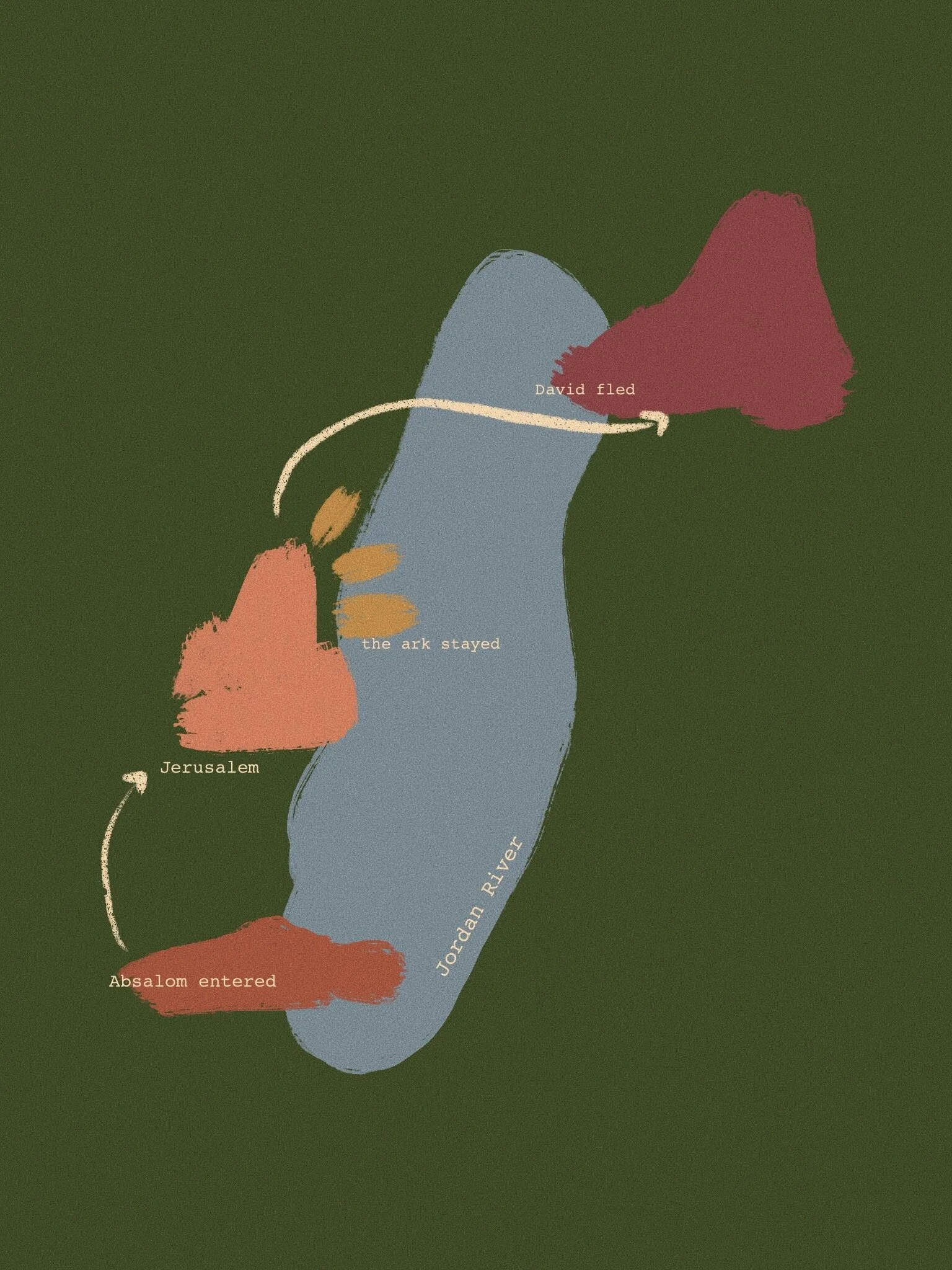
In these chapters we can observe where different people are. Absalom came from Geshur after David invited him back to Jerusalem. David then had to flee Jerusalem because of Absalom’s conspiracy. He was once again on the run, as he had been when Saul was seeking his life. And, though the Lord had anointed David as king and it was His plan, the ark of the covenant and God’s presence were meant to stay in Jerusalem and not with David. David also sent people back to keep him informed and offered others the chance to stay in their homes instead of on the run with him. The choices these people made were all important enough to be included. David ends up at the Jordan River where a man from the tribe of Benjamin was as well. Why would all these locations be important enough to be mentioned? Why would the author find it important to not only show where Absalom and David were but also where the ark of the covenant was? How does this all relate to what David did with Bathsheba and to Uriah?
Much of what happens during this battle between Absalom and David reflects events that had happened earlier in Israel’s and David’s history. Jonathan and Ahimaaz hiding in the well calls back to Joshua 2 when Rahab hid the spies in Jericho before they took over the city. The forest took more lives than the fighting men did is similar to many battles Israel had fought in Joshua and Judges when the Lord caused the victory. Joab killing Absalom against David’s orders was like what he did to Abner. And David mourning Absalom though he was his enemy mirrors how he mourned Saul. This text also emphasizes that the Lord was with David. In chapter 15:25-26 David says that what the Lord had planned was what must be done and he sent the ark of the covenant back to Jerusalem. Why would all of this be significant to the story? What do the reflections in the story show about this battle?
As David gets called back into Israel he reminds the priests that they are of the same tribe and they should have been the ones to call him back. Instead all the citizens of Israel had asked for him. The rest of chapter 19 then talks of different men from other tribes who David treated graciously as if they were of the same blood and bone. Shimei had been cursing David as he fled Absalom. But here he humbles himself and David shows him mercy. Mephibosheth explained why he hadn’t been with David while on the run and David honors him and provides for him. Barzillai went with David as far as he could and sent Chimham to stay with him the rest of the way. Why would the author find it important to include these stories? What would they show later Israelites reading this book about David's character and leadership as king? Why would their reading of David’s kindness and generosity be important after he was gone?


In chapters 20 and 21 we read that a small amount of men were given on behalf of a larger number. As Joab was seeking out Sheba, he was destroying an entire city. When told that what he was doing was wrong, he asked that he be given Sheba and promised to stop the siege. Then the Gibeonites needed to be reconciled with because of Saul’s treachery towards them. Instead of requiring the blood of tons of Israelites, they asked that seven of Saul’s sons were given over for the blood guilt. These passages are placed between the story of David fleeing from Absalom and another war with the Philistines. Why would it be written that many people were spared and only a few were killed? How does this correlate to the surrounding stories?
David’s men fought the Philistines and defeated many more giants. What was what made David renowned in all of Israel, he passed on to others in his army. Then he praises the Lord. After many victories, David still worshiped and acknowledged that all his success came from God. With poetry like this song, looking for repeated words can help give a sense of the overall theme the singer/author is trying to express. Why would David use words the Rock and Salvation to describe God? How does this relate to everything he experienced throughout 1 and 2 Samuel? Why would the author of 2 Samuel want to end their book with poetry like this?


After David’s oracle, we read about David’s mighty men and their accomplishments. Once again showing that what David did was shared among others in Israel. His oracle reflects this as well. He acknowledges that it was because he ruled justly that God was causing him to prosper and that the blessings God was pouring out weren’t just for him but for all of his kingdom in Israel. Why would the author note this oracle as David’s last words? Why would they put a list of accomplishments among these men of Israel? Why would this be significant to later readers?
It is believed that the reason David would take a census would be to assess their military and understand how many fighting men they had. This wouldn’t be uncommon for kings in the ancient Near East to do. The problem is that this takes away from the trust in the Lord to fight their battles. God had sent able bodied men home from battles to show that He was in control but now David was looking at his own abilities and this could lead to him believing they were victorious without the Lord. When God punished Israel for David’s haughtiness, David repents and builds an altar to the Lord. The threshing floor would be an open space that was often used as a place for gathering. Later, this same place where David built his altar would be the ground for the Lord’s temple.

You Finished 1+2 Samuel!
Now that you have finished observing and interpreting, I would encourage you to reflect on the timeless truths you have found in the Word and to apply it to your life. Here are some questions to help bring Leviticus home.